Under-Bed Storage Ideas That Don't Look Like Storage
This post may contain affiliate links. If you buy through them, we may earn a small commission at no extra cost to you.
Under the average queen bed sits about 10 square feet of storage — in a small apartment, that's a whole closet you're already paying rent on. The problem isn't the space; it's how it usually looks. Mismatched plastic bins, a vacuum bag escaping out the side, one shoe that lives alone now. Under-bed storage has a reputation problem, and it's earned.
The fix is one idea: the part that shows should match the room, not the storage aisle. What peeks out from under your bed is visible every single day — treat it like furniture and the bedroom reads calm; treat it like a warehouse and it reads cluttered, even when it's technically organized. These are the rules and setups from our small bedroom ideas guide, expanded into a full under-bed system.
First, measure your clearance. Frame to floor: most beds give you 5–7 inches; platform and lifted frames give 10–14. Write the number down. Every container below is chosen by that number, and guessing is how bins end up wedged halfway forever.
1. The matching woven basket set (best all-rounder)
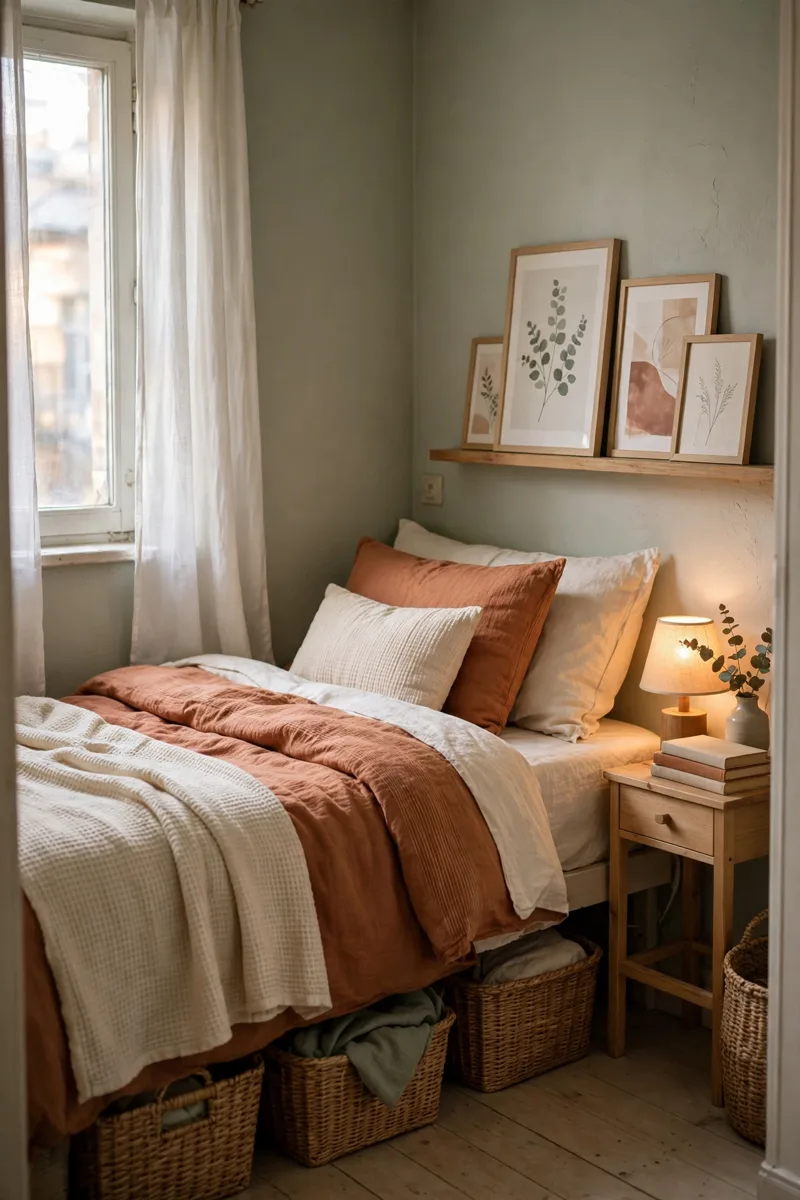
Two or three identical woven or fabric baskets, same color, same size, slid side by side. Because they match, the eye reads them as one designed element — a "base" for the bed — instead of storage. Use them for the things you reach for weekly: extra blankets, off-season pajamas, the good towels. Typical cost: $12–20 each. Fits: 7-inch clearance and up.
2. Low drawers on wheels (best for daily use)
A pair of low wooden or bamboo rolling drawers turns the under-bed into a dresser you don't have to find floor space for. Daily clothes, workout gear, the kids' pajamas at grandma's — anything you open every day belongs on wheels, because dragging a bin twice a day is how systems die. Fits: 6-inch clearance and up; measure the wheel height too.
3. The long flat "suitcase" bin (best for linens)
One long, low, lidded container in a fabric that matches your bedding palette — not clear plastic. Clear bins advertise their contents; a covered one just looks like part of the bed. Guest linens, the spare duvet, seasonal quilts: things you open monthly, not weekly. Fits: 5-inch clearance and up.
4. Vacuum bags — hidden inside a basket
Vacuum bags are genuinely unbeatable for bulky soft things (winter duvets, coats), and genuinely ugly on their own. Compromise: vacuum-bag the contents, then slide the bags inside one large flat basket or fabric box. You get the compression and the room gets the calm. Label the basket, not the bag — future you opens the pretty thing first.
5. The bed skirt strategy (for frames that fight you)
Sleigh beds, divan bases and low frames sometimes leave a gap too awkward for containers. A simple linen bed skirt in your bedding's color family hides the zone entirely, and behind it you can use the cheap clear bins you already own. Nothing to match, nothing to see. This is the budget answer and there's no shame in it — hidden and neat beats visible and stressed.
6. One "guest-ready" corner
Reserve the section nearest the door for a flat basket with the guest kit: clean sheet set, a towel, a spare phone charger. In a small apartment, hosting usually means the living room becomes a bedroom — having the kit in one grabbable place is the difference between welcoming and scrambling. (Our reading nook guide has the matching trick for making guests a corner of their own.)
What goes under the bed — and what never does
Belongs there: off-season clothes, spare linens and blankets, guest kit, gift wrap and luggage (nested, empty), keepsakes in one lidded box. Never: anything you need daily at bin-dragging depth (it'll migrate to a chair), heavy books (frames sag, floors scratch), documents and photos (the floor is the first place water goes in a leak), and anything edible — ever, for pest reasons alone. Rule of thumb: under-bed is a monthly zone. Daily things live in drawers and closets; if you're under the bed every morning, the zoning is wrong, not the bed.
The shopping order (so you buy once, not three times)
Under-bed storage goes wrong in a predictable sequence: buy first, measure later, return twice. Do it in this order instead. First, the clearance number — frame to floor, at the lowest point, because frames bow and floors aren't level; measure at three spots and shop for the smallest. Second, decide zones before products: how much of the bed's footprint is weekly (sides), monthly (head end), and guest (door side)? A queen bed gives you roughly three basket-widths per side — plan the count, then shop the count. Third, buy the visible set as one purchase. Matching matters more than material: three identical $12 fabric boxes outperform a mixed set of "nicer" containers at twice the price, because the eye reads repetition as design. Fourth, the hidden zone can stay cheap — vacuum bags and the bins you already own live behind the skirt or at the head end where nobody sees them. Spend on what shows; save on what doesn't. That split is the entire economics of this post.
Fits-clearance cheat sheet, so the store trip goes once: 5 inches — flat fabric bags and vacuum bags only. 6–7 inches — low rolling drawers and most woven baskets (check the handle height, it counts). 8–11 inches — standard storage baskets and shoe organizers standing upright. 12 inches and up — you have platform-bed luxury: even small lidded boxes and a gift-wrap station fit. Write your number on a note in your phone next to the bed's footprint dimensions (a queen's under-space is roughly 60×80 inches; a twin's about 38×75). Every under-bed product lists its height — if the listing doesn't, that silence is your answer about whether it was designed for real beds.
FAQ
How do I keep under-bed storage from looking messy? Match the containers to each other and to the bedding palette, keep every container fully under the frame line, and leave no gaps where single items can escape. Three identical baskets read as furniture; five different bins read as storage.
What is the best under-bed storage for a low bed? At 5 inches of clearance, skip rigid boxes: use flat fabric bags or the bed skirt strategy. At 7 inches, woven baskets and most rolling drawers fit. Measure before buying — clearance is the whole game.
Is under-bed storage bad for mattresses or airflow? Soft storage (clothes, linens) is fine. Avoid sealing the entire underside with airtight plastic wall-to-wall; leave some gaps and lift items off the floor slightly in damp-prone homes.
How do I stop dust under the bed? Lidded containers only, and run the vacuum's crevice tool along the frame line monthly — it takes two minutes when the bins slide out on wheels or fabric bottoms instead of being dragged.
Set it up this weekend
Measure the clearance, order one matching set (not three different "deals"), and zone it: weekly on the sides, monthly at the head, guest kit by the door. Then step back — if the bedroom looks calmer from the doorway, it worked. For the closet half of the system, see our small closet organization guide, and if you're starting the whole bedroom from scratch, the renter-friendly decor guide plus the free checklist will keep every purchase deposit-safe.