Cozy Reading Nook Ideas for Small Spaces: A Corner Is Enough
This post may contain affiliate links. If you buy through them, we may earn a small commission at no extra cost to you.
Reading nooks look like the ultimate spare-room luxury — a window seat, a built-in bench, a little library corner in a house with rooms to spare. Meanwhile in a small apartment, every corner is already doing two jobs.
But a nook isn't a room. A nook is a feeling with a footprint of about 3×3 feet: one chair you sink into, light that lands on the page, and enough layers that your body understands "we're resting now." Searches for reading nooks in small spaces have exploded for a reason — people aren't short on books, they're short on permission to stop. A corner gives you that. Here's how to build one anywhere, including a rental, including tonight.
The nook formula (chair + light + layers)
Every good nook, at any budget, is these three things. Skip one and it never quite works — a beautiful chair under a ceiling light is just a chair.
1. The chair: sized for the corner, built for an hour
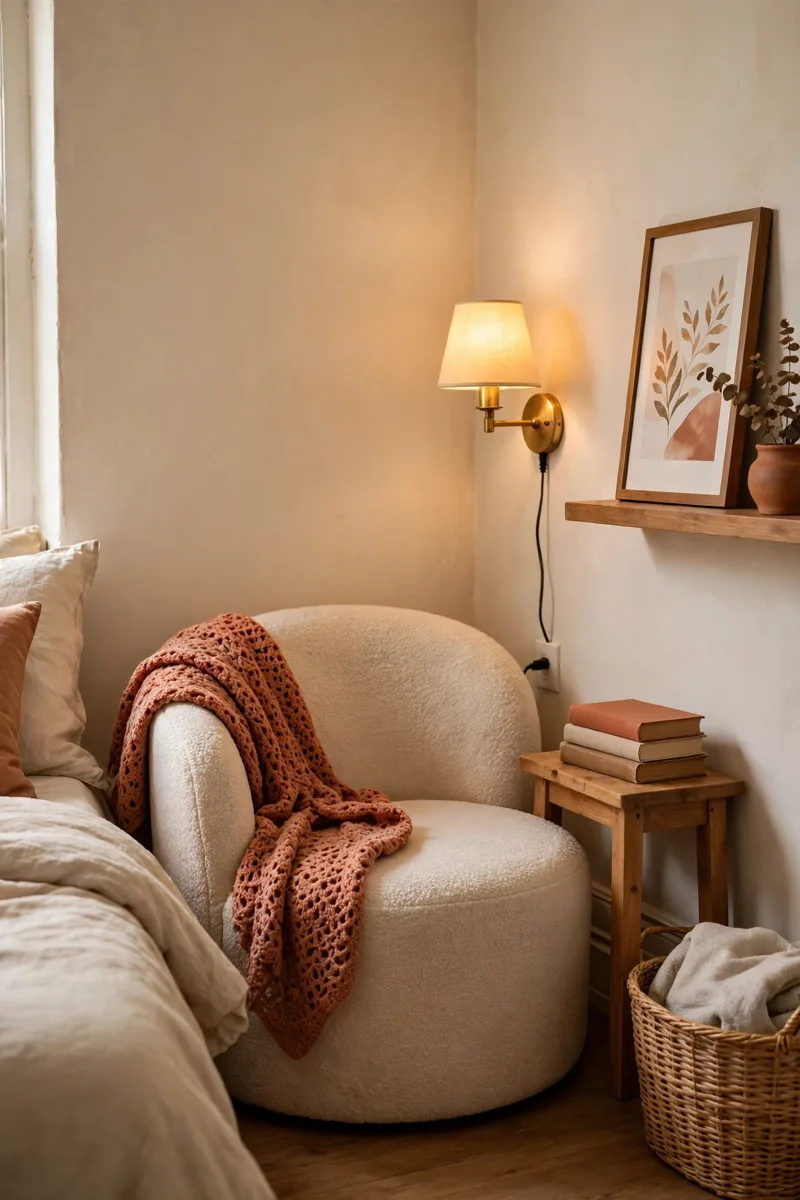
Measure your corner first: most small-space nooks fit a chair 26–30 inches wide. Look for a rounded or armless profile (arms eat inches), a seat deep enough to curl in sideways, and upholstery you can throw a blanket over. Bouclé and rounded "cloud" styles are trending hard for a reason — they read soft even in a photo — but a thrifted armchair with a good cushion does the same job. Cost: $0 (move a chair you own) to $90–$150 new.
2. The light: warm, low, and on the page
This is where nooks are made. A plug-in wall sconce beside the chair (adhesive hook mount, cord to the outlet — the full renter-safe method is in our renter-friendly decor guide) or a small table/floor lamp with a 2700K warm bulb, positioned over your shoulder. If the light comes from the ceiling, you don't have a nook, you have seating. Cost: $20–$45.
3. The layers: what your body reads as "rest"
A throw over the chair arm (crochet and knit textures photograph and feel the coziest), a cushion behind your back, a basket or small table within arm's reach for the book, glasses and a drink. Nothing matches perfectly; everything is soft. Cost: mostly things you already own.
5 corners that secretly want to be nooks
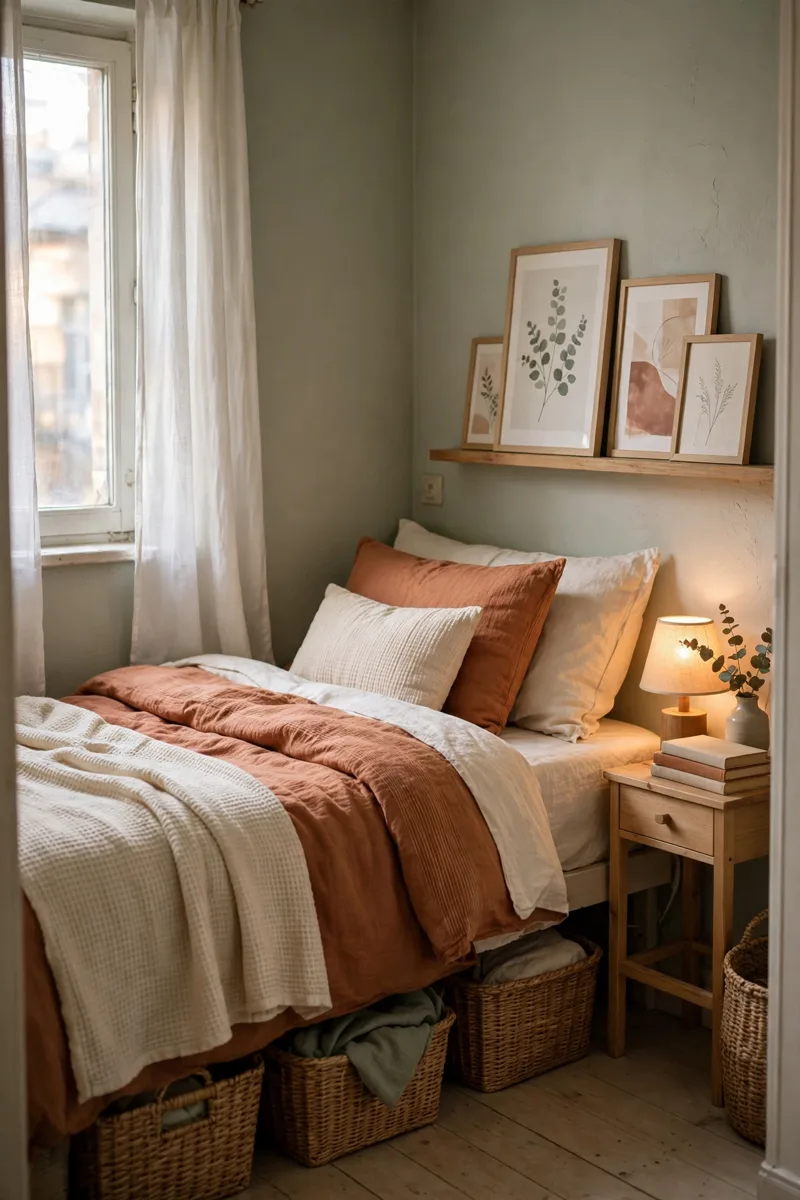
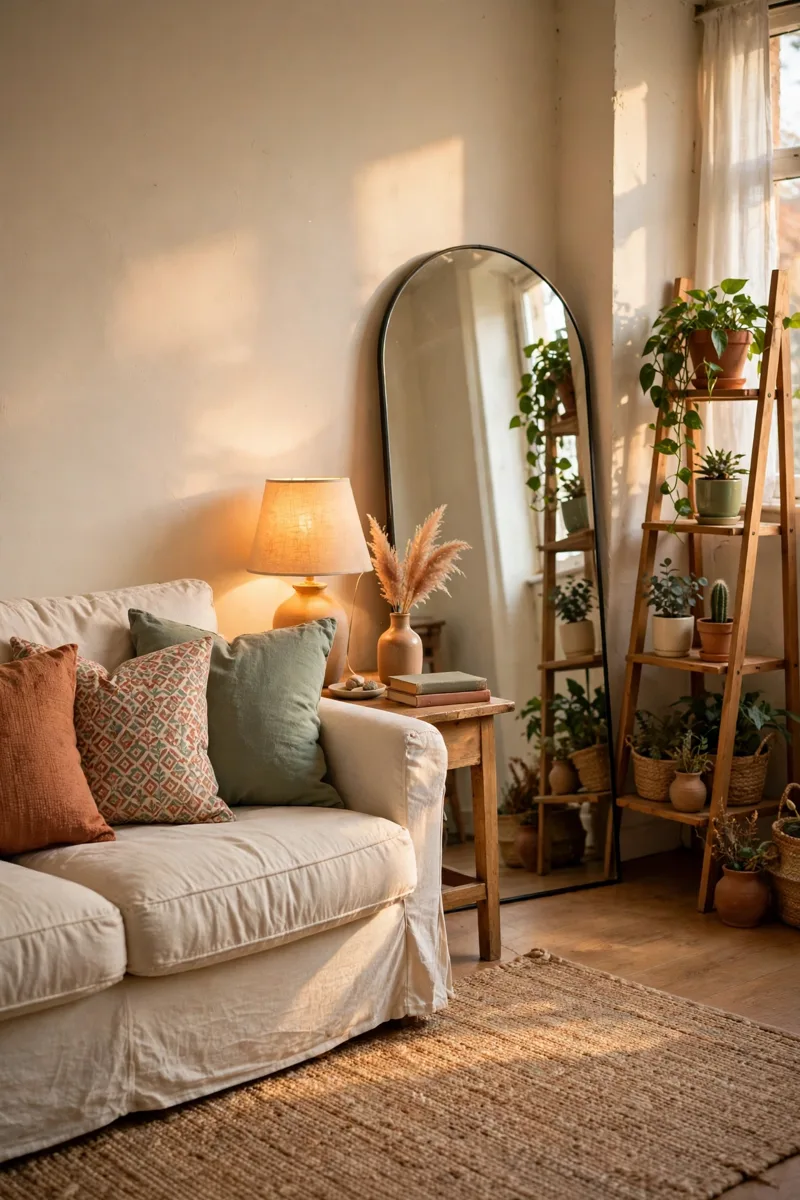
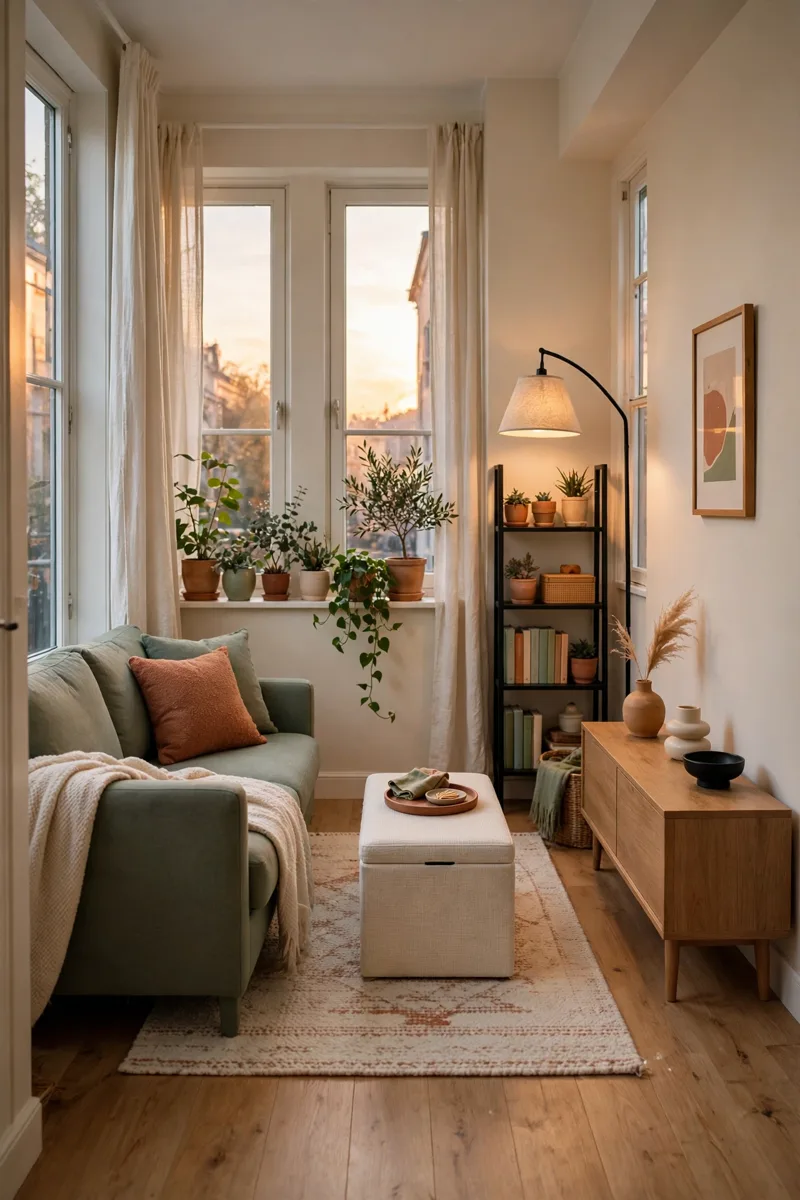
1. The bedroom corner — the classic. Chair where the laundry pile currently lives (give the pile a basket instead), sconce on the wall, done. Our small bedroom guide uses this exact corner as Idea 11 — it makes the whole bedroom feel bigger because it gains a second use. 2. The living room dead corner — the one behind the sofa's end or beside the bookshelf. Layout 7 in our living room layouts post is built on this: finish ONE corner completely and the whole room looks designed. 3. The closet nook — remove a small closet's door (keep it safe for move-out), add cushions, a battery or plug-in light, and shelves of books. It sounds like a gimmick until you sit in one: enclosed, quiet, and the best reading light control in the house. Adults fit fine — it's a chair's worth of floor. 4. The window strip — a chair angled to a window with a plant beside it. Daylight reading, zero lamp needed until evening. In studios, a low bookcase doubles as the nook's "wall." 5. Under the stairs / the hallway end — rentals have these odd pockets constantly. If a chair fits and an outlet is near, it's a nook with a lamp and a rug scrap.
Make it a ritual, not a display
A nook you use beats a nook you photograph. Keep the current book IN the chair, the throw ON the chair, and a small "session kit" in the basket: bookmark, glasses, coaster, maybe a scented candle on the table (scent is half the memory of a place). The rule that keeps it alive: the nook is only for reading (and its close cousins: journaling, tea). No laptop, no doomscrolling perched in it — the corner stays associated with stopping.
A word about light color (the detail nobody mentions)
Two nooks with identical chairs can feel completely different because of one invisible choice: bulb temperature. Reading light should be warm — 2700K, the color of late afternoon. Bulbs at 4000K and above are "daylight" bulbs; they're honest light for a desk or a kitchen, but in a nook they make the corner feel like a waiting room and quietly keep your brain in work mode. If your sconce or lamp takes a replaceable bulb, this $3 swap is the highest-impact money in this entire guide. The second detail: the light should fall on the page from beside or slightly behind your shoulder, never from directly in front (glare) and never from the ceiling (flatness). Position first, wattage second — a dim lamp in the right place beats a bright one in the wrong place every evening of the year.
One more ritual upgrade that costs nothing: give the nook a start signal. Light the candle, make the tea, put the phone in another room — the same small sequence every time. Within a week your body starts relaxing at the sequence, not just the chair. That's the difference between furniture and a nook: furniture you sit in; a nook is a place your nervous system recognizes.
Budget builds
- $0 version: move your best chair to the best corner, steal the throw from the sofa, borrow the bedroom lamp for the evening. Tonight counts.
- Under $50: thrifted chair or a big floor cushion set + one warm lamp.
- Under $100: the full formula — compact chair, plug-in sconce, basket, throw.
Mistakes that kill a nook
- Chair sized for the photo, not the corner — measure; a chair 2 inches too wide will annoy you daily.
- Light from above or behind a screen — glare and ceiling light both break the spell.
- No surface within reach — if the drink goes on the floor, you'll stop using the nook.
- Making it the dumping corner "temporarily" — a nook with mail on it is a shelf. Defend the corner.
FAQ
How much space do I actually need for a reading nook? About 3×3 feet for a compact chair setup; a floor-cushion nook can work in 2.5×3. If a chair fits and you can sit without touching anything else, you have a nook.
What's the best chair for a small reading nook? 26–30 inches wide, deep seat, low or no arms, soft upholstery. Rounded bouclé styles are the current favorite; a thrifted armchair is the budget equivalent.
Can I make a nook in a rental without drilling? Yes — plug-in sconces hang from adhesive hooks, art leans, and everything else is furniture. Nothing in the formula requires a hole.
Where do people put reading nooks in small apartments? Bedroom corners first, then living room dead corners, closets, and window strips — the five spots above cover almost every floor plan.
Claim your corner this week
Walk your home tonight and pick the corner. Move a chair into it before you buy anything, read there once by lamplight, and only then spend money on what was actually missing. The free checklist has a corner-by-corner section to plan it — and when the nook works, you'll know why it's the most-loved square meter in the house.
Get the Free Renter-Friendly Makeover Checklist
Room-by-room no-drill steps, a budget tracker and a move-out undo log — free PDF, no email needed.
Download the Free Checklist