15 Renter-Friendly Decor Ideas That Need No Drill (And No Deposit Risk)
This post may contain affiliate links. If you buy through them, we may earn a small commission at no extra cost to you. We only recommend things that make sense for small, rented spaces.
Your lease says no holes, no paint, no "alterations." Your apartment, meanwhile, still looks like the listing photos — blank walls, one harsh ceiling light, and furniture floating in the middle of the room because there's nowhere sensible to put it.
Here's the good news: almost everything that makes a home feel cozy — warmth, layers, light, personality — has a renter-safe version. No drill. No damage. Nothing to explain to your landlord on move-out day.
These 15 renter-friendly decor ideas are the exact ones we'd start with in any small rental. Every single one is reversible, most cost under $50, and together they take a space from "temporary" to "mine."
Before you start — two 2-minute rules that protect your deposit: 1. Skim your lease once. Most leases ban nails and paint but say nothing about adhesive products, tension rods, or things that simply lean. Know which camp yours falls into. 2. Patch-test every adhesive. Peel-and-stick products and adhesive strips go on a hidden spot (inside a closet) for 24 hours first. If it peels clean there, it's safe everywhere.
1. Lean a big mirror instead of hanging one
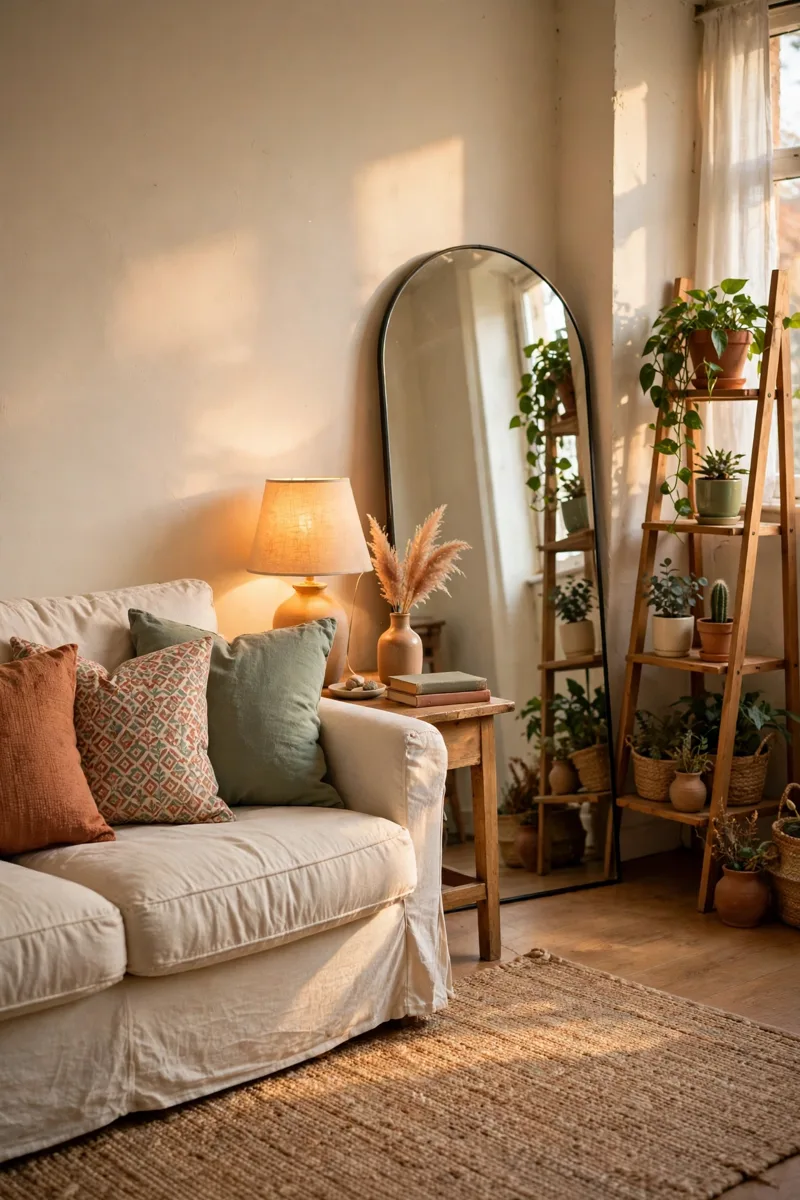
A large mirror leaning against the wall opposite a window doubles the light in a small room and visually doubles the space. It needs zero hardware — just lean it at a slight angle and add an adhesive bumper pad behind the top edge so it can't slide. Arched mirrors are having a moment, but any oversized frame works. Typical cost: $40–$120, and it moves with you forever.
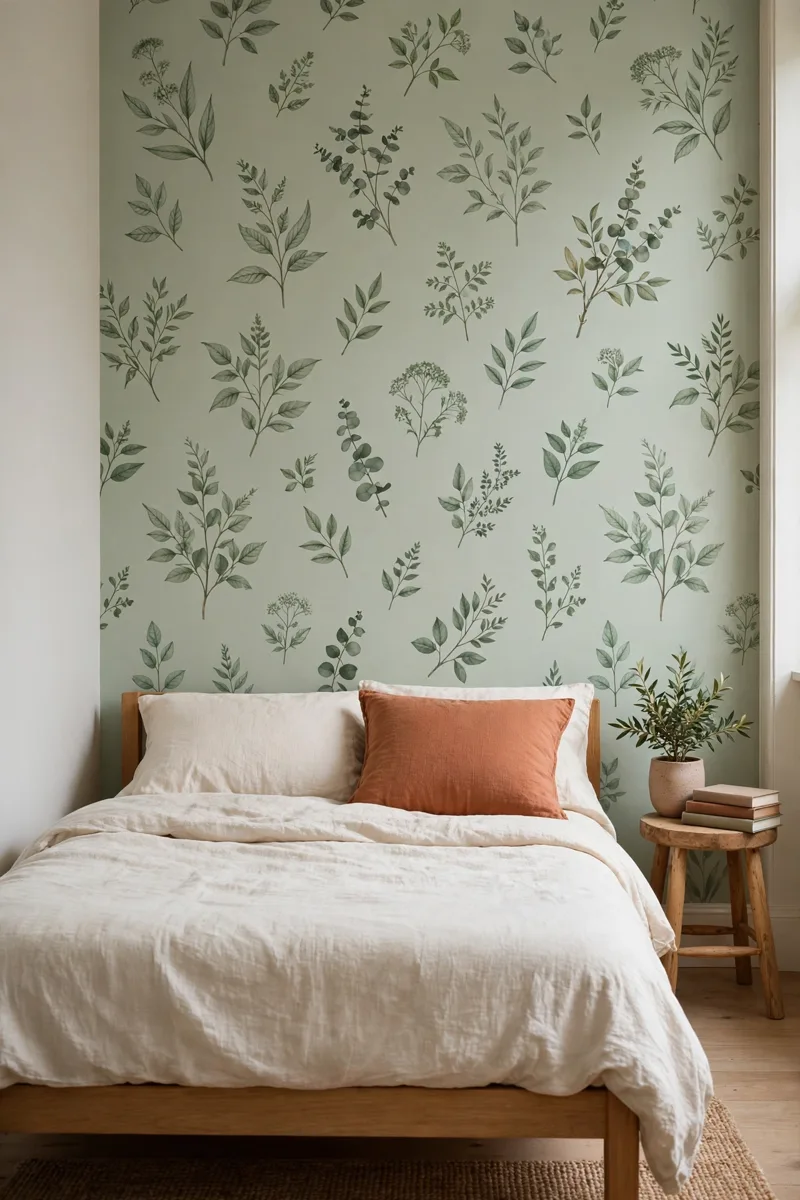
2. One peel-and-stick accent wall
Modern removable wallpaper genuinely peels off clean — apply it to ONE wall (behind the bed or sofa) and the whole room changes. Smooth, clean paint takes it best. Start from the top corner, smooth downward with a credit card, and don't stretch it. Typical cost: $40–$100 for one small wall.
3. Layer a rug over the rental floor
Rental floors are rarely the floor you would have chosen. One large rug — big enough that the front legs of your sofa and chairs sit on it — covers the problem and defines the room in one move. Low-pile and washable if you have pets or kids. Typical cost: $50–$150.
4. Peel-and-stick backsplash in the kitchen
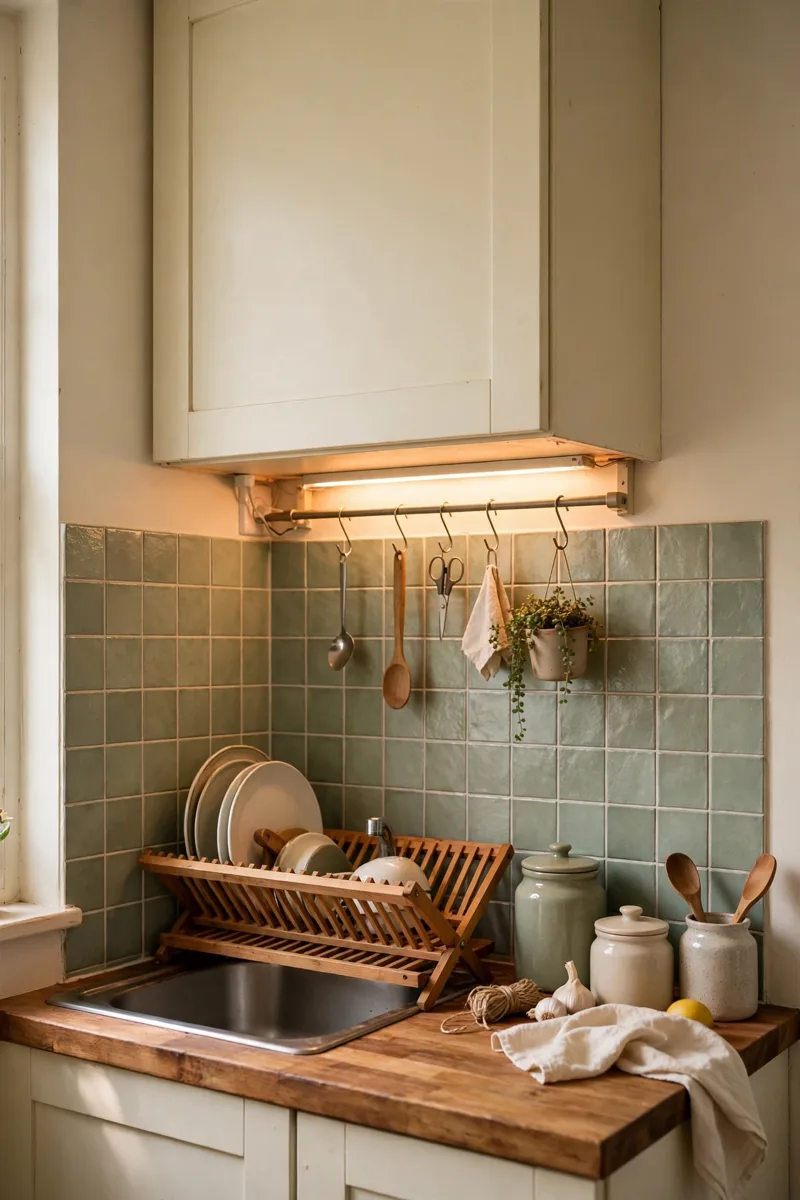
Stick-on tile sheets over an existing backsplash (or plain painted wall) give a rental kitchen a finished look that photographs like a renovation. They handle splashes fine and peel off at move-out. Measure twice — the area is smaller than you think, so this is usually a cheap project. Typical cost: $25–$60.
5. Fix the lighting with lamps, not the ceiling light
That single overhead light is why your rental feels like an office. Turn it off. Use two or three lamps instead — a floor lamp in the corner, a table lamp beside the sofa — all with warm-white bulbs (2700K). This one change does more for "cozy" than any decor object on this list. Typical cost: $20–$40 per lamp; thrift stores are gold mines.
6. Plug-in wall sconces for real reading light
Plug-in sconces hang from a single adhesive hook and plug into a normal outlet — the cord runs down the wall (tuck it behind furniture or use a cord cover) and you get the look of hardwired lighting with none of the wiring. Perfect beside a bed or reading chair. Typical cost: $25–$60 each.
7. Tension rods where screws can't go
Tension rods hold curtains inside window frames, create a "door" for an open closet, divide a studio corner, and hang storage inside kitchen cabinets. They grip by pressure, leave no mark, and cost almost nothing. Measure the gap and pick a rod rated for the middle of that range. Typical cost: $8–$20 each.
8. Build a reading nook in any corner
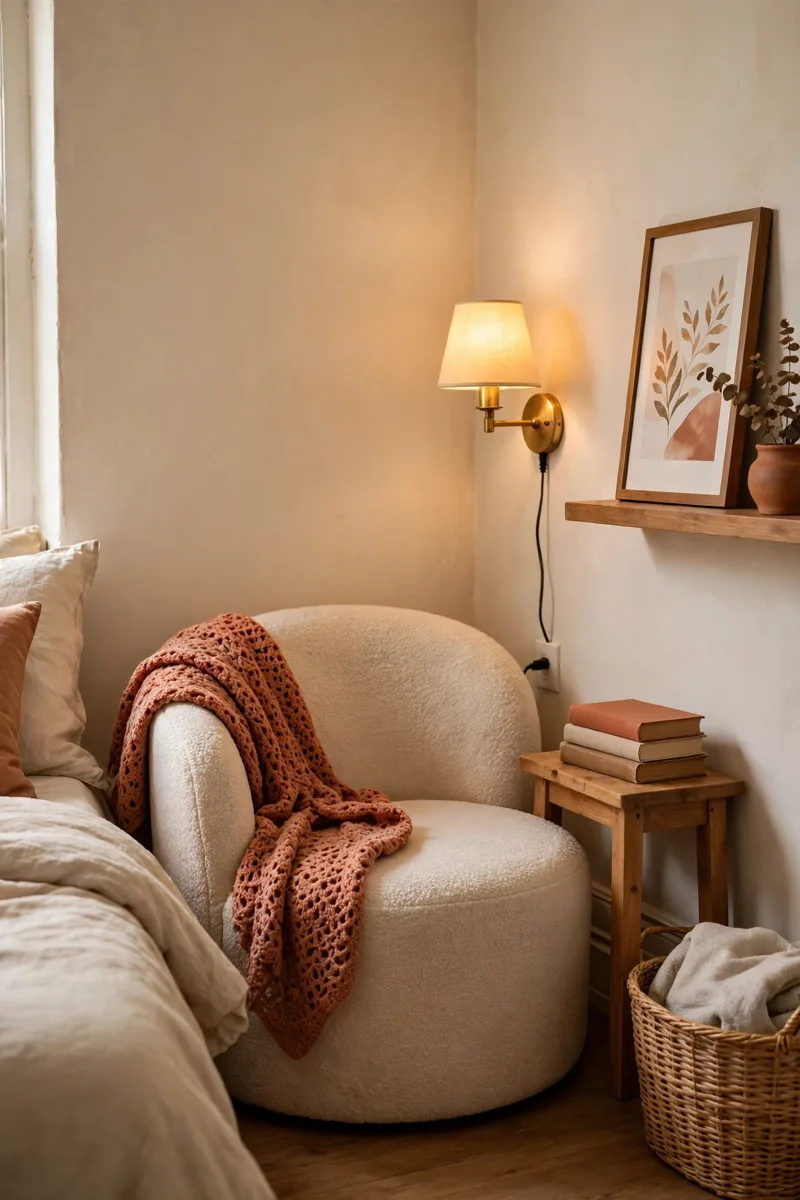
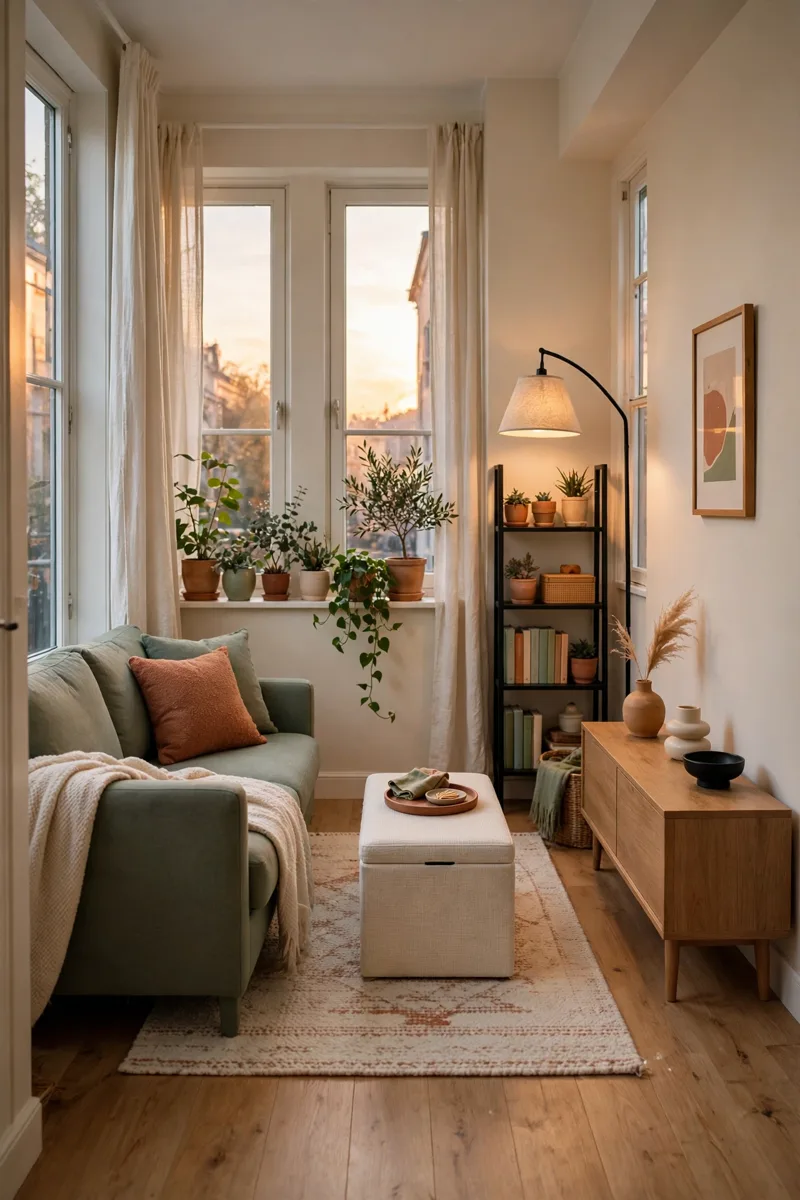
You don't need a spare room — you need one chair, one lamp, and one basket. A rounded comfy chair in the corner, a throw over the arm, a small side table or stack of books, and a plug-in sconce above: that's a nook. It's the most-used square meter in most small homes. Typical cost: $60–$150 if you buy the chair new; much less thrifted.
9. Command hooks — but make them look expensive
Adhesive hooks fail aesthetically when they look like, well, adhesive hooks. Choose matte black, brass, or wood-finish hooks, hang things in deliberate groups (a small gallery, a plant cluster, hats by the door), and the hook disappears into the design. Respect the weight ratings and wait the full hour before hanging. Typical cost: $10–$25 for a set.
10. Freestanding and ladder shelves instead of wall shelves
A leaning ladder shelf gives you five shelves of storage and display with zero wall contact — plants, baskets, books, folded throws. Narrow ones fit entryways and bathroom corners where a bookcase never would. Typical cost: $40–$90.
11. Fake an entryway with a console and a runner
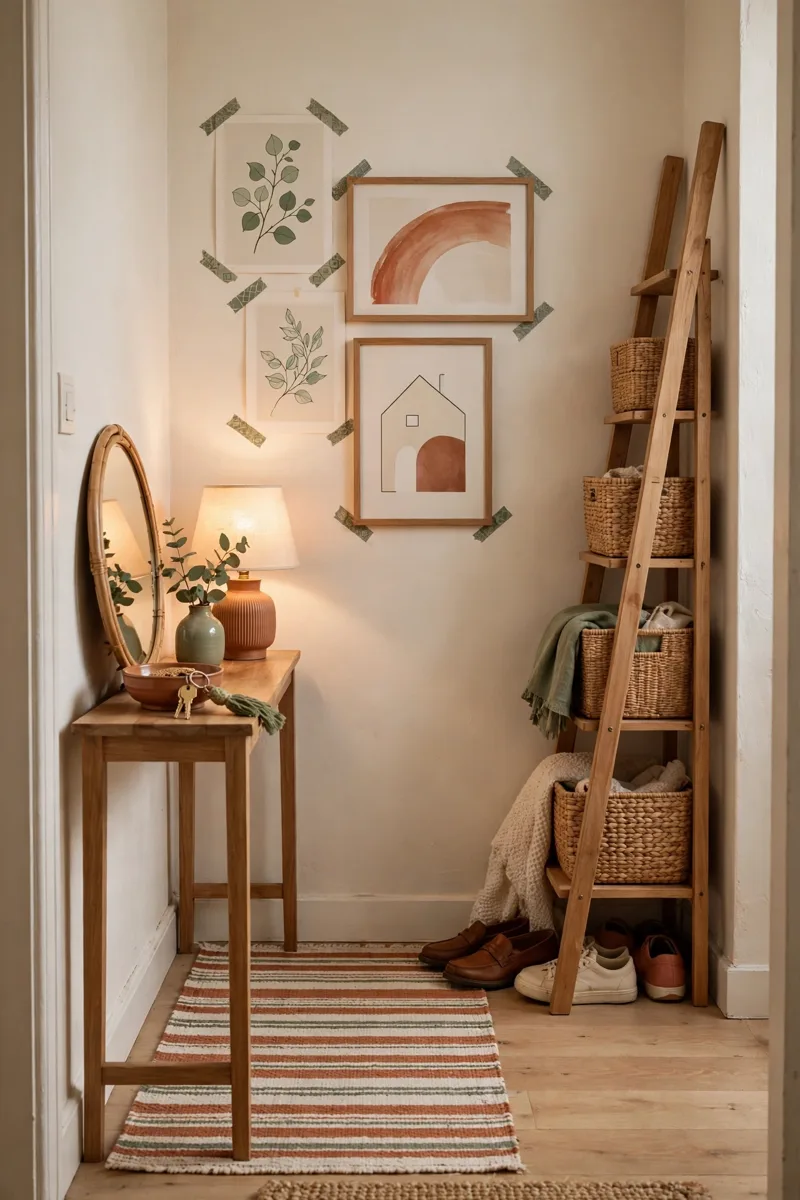
No entryway? Draw one. A narrow console table (or a slim shelf unit) by the door, a runner rug pointing into the room, a small bowl for keys, and one leaning mirror or stacked frames above. Your brain reads it as a separate room — and your keys stop living on the kitchen counter. Typical cost: $50–$120.
12. Curtains hung high, with adhesive brackets or tension rods
Curtains change a room's proportions. Hang them as close to the ceiling as your no-drill method allows and let them just touch the floor. Adhesive curtain-rod brackets handle lightweight panels well; inside-frame tension rods are the zero-trace option. Linen-look panels keep it soft and bright. Typical cost: $25–$70 for a window.
13. A washi-tape gallery wall
Frames without nails: washi tape in a color that suits your palette, taped in neat corners over unframed prints, gives you a gallery wall you can rearrange monthly at zero cost and zero risk. It reads playful and intentional — especially in a hallway or above a desk. Typical cost: under $10.
14. Under-cabinet light strips for the kitchen
Battery or USB light strips stuck under kitchen cabinets (adhesive backing) end the era of chopping vegetables in your own shadow. Warm light, motion-sensor versions exist, and they peel off when you leave. Kitchens feel twice as expensive with lit counters. Typical cost: $12–$25.
15. One "home" ritual corner: coffee, tea, or scent
Cozy isn't only visual. Claim one small surface for a ritual — a 2-square-foot coffee corner on the counter, a tea tray by your chair, a candle-and-diffuser tray (scent stacking) in the entryway. It's the cheapest idea here and somehow the one that makes people say a place "feels like you." Typical cost: $10–$30.
3 mistakes that make renter decor look temporary
- Everything small and floating. Tiny frames scattered on a big wall, one small rug in a big room — scale up. Fewer, bigger pieces look intentional.
- All the light from the ceiling. One overhead bulb flattens everything. Lamps at different heights are the entire trick.
- Buying for the next apartment. Decorate the one you live in, with things that are portable (rugs, lamps, mirrors, shelves travel well). Future-you will still love them.
FAQ
Will peel-and-stick wallpaper damage my walls when I remove it? On smooth, properly painted walls, quality removable wallpaper peels off cleanly — that's what it's made for. Avoid matte/flat paint in poor condition and always patch-test first. Heat from a hair dryer helps it release.
How do I hang things without nails in a rental? Lean it (mirrors, big art), prop it (frames on shelves and consoles), stick it (adhesive hooks and strips within their weight ratings), or tape it (washi tape for light prints). Between those four, almost anything can go on display.
What if my lease bans adhesive products too? Then lean, prop, tension, and layer — Ideas 1, 3, 5, 7, 8, 10, 11, and 15 need no adhesive at all. You still get most of the transformation.
What's the cheapest first move if my budget is tiny? Lighting (Idea 5) with one thrifted lamp, then a washi-tape gallery (Idea 13). Under $25 total, and the room already feels different tonight.
Can I make a rental feel cozy without buying anything? Start with what you own: move lamps off the ceiling light's schedule, group your frames together instead of spreading them out, fold your nicest throw where you'll actually see it, and clear one surface completely. Cozy is as much editing as buying.
Start with the checklist, not the cart
Before you buy a single thing, walk your apartment with the free Renter-Friendly Makeover Checklist — it takes you room by room through what to lean, stick, tension, and layer, with a budget tracker and a move-out "undo" log so future-you gets the full deposit back.
Get the Free Renter-Friendly Makeover Checklist
Room-by-room no-drill steps, a budget tracker and a move-out undo log — free PDF, no email needed.
Download the Free ChecklistPick your worst room, do two ideas from this list this week, and watch what happens. Small spaces don't need permission to be cozy — and neither do you.