No-Drill Decor Hacks for Kitchen and Bathroom
This post may contain affiliate links. If you buy through them, we may earn a small commission at no extra cost to you.
The kitchen and bathroom are where rental rules bite hardest. They're tiled (drilling = cracked tiles and a very expensive conversation), they're steamy (half the adhesives on the market quietly give up), and they're the rooms guests actually judge. They're also the rooms most renters leave completely bare — white, echoing and a bit sad — because every obvious idea starts with a drill.
The good news: these two rooms have more no-drill hardware invented for them than the rest of the home combined. The trick is matching the method to the room's conditions — heat and grease in the kitchen, steam and smooth tile in the bathroom. Everything below passes our move-out test (undone in about 10 minutes, no marks), and everything is an extension of the no-drill toolkit in our renter-friendly decor ideas guide, specialized for wet rooms.
The 4 methods, ranked for wet rooms: 1. Tension — rods and poles that wedge between surfaces. Immune to steam, removable in seconds. The wet-room champion. 2. Over-door and over-cabinet hooks — zero adhesive, zero risk, and doors are the most underused "walls" in a rental. 3. Steam-rated adhesive — only products specified for bathrooms; look for "bathroom," "humidity" or weight ratings tested on tile. 4. Suction — brilliant on smooth glass and glazed tile for light items, useless on matte or textured surfaces. Know your tile before you buy.
The kitchen half
1. A tension rail under the cabinets
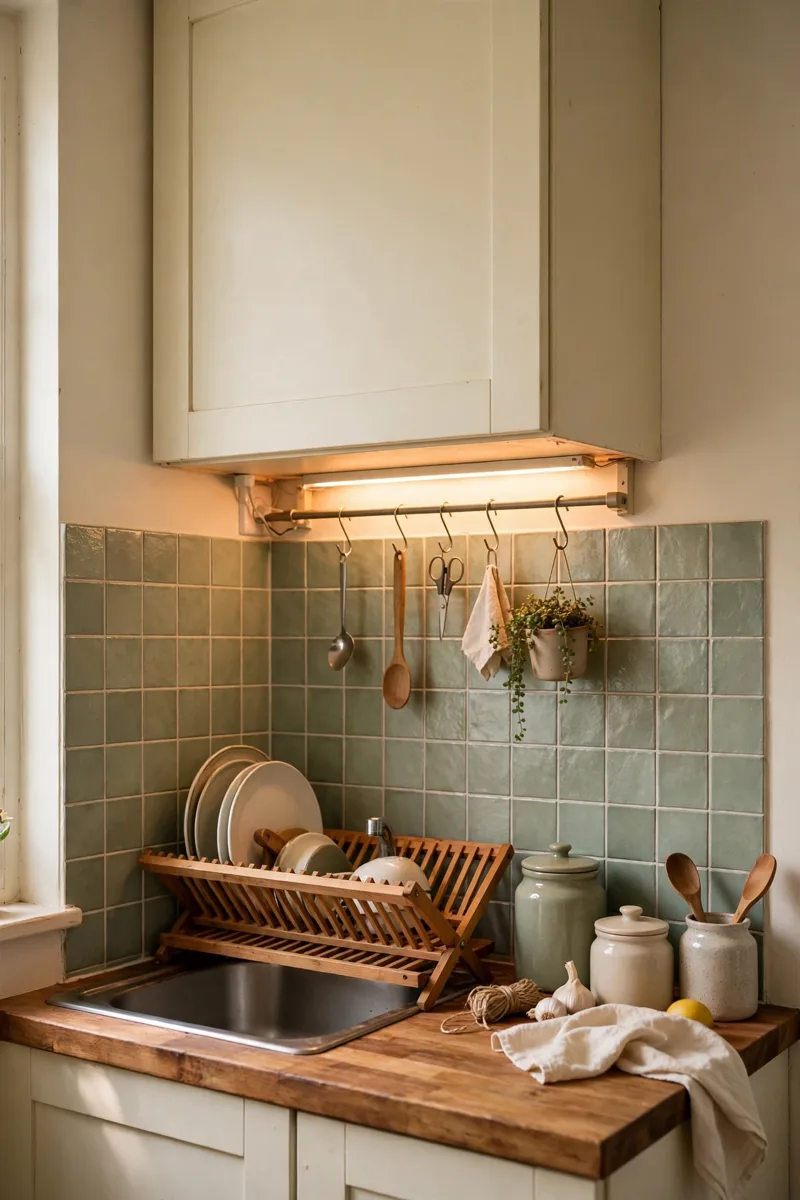
A spring tension rod between the cabinet sides, S-hooks along it: utensils, mugs, a small herb pot. Everything leaves the counter, nothing touches the wall, and the rod comes down in seconds. (This is hack-adjacent to the full system in our small kitchen organization guide — start there if your counters are the real problem.)
2. Peel-and-stick backsplash, one strip wide
You don't need to tile the whole wall. One horizontal strip of peel-and-stick tile or washable wallpaper behind the stove and sink changes the whole room's temperature — and in the kitchen, choose heat-rated, wipeable products only, kept a safe distance from open flame. Renters: do a small test patch behind the fridge first.
3. Over-cabinet-door everything
Towel bars, a slim trash caddy, hooks for oven mitts — all hanging inside or outside cabinet doors. The outside of the under-sink door is prime real estate most rentals waste entirely.
4. A leaning "art" layer
A framed print or a wooden cutting board collection, leaned on the counter against the wall, hides the rental-white backsplash and the inevitable outlet cluster. Zero attachment of any kind; move it to wipe the counter. Leaned layers are how kitchens in magazines look "styled" without a single screw.
The bathroom half
5. The over-toilet tension pole shelf
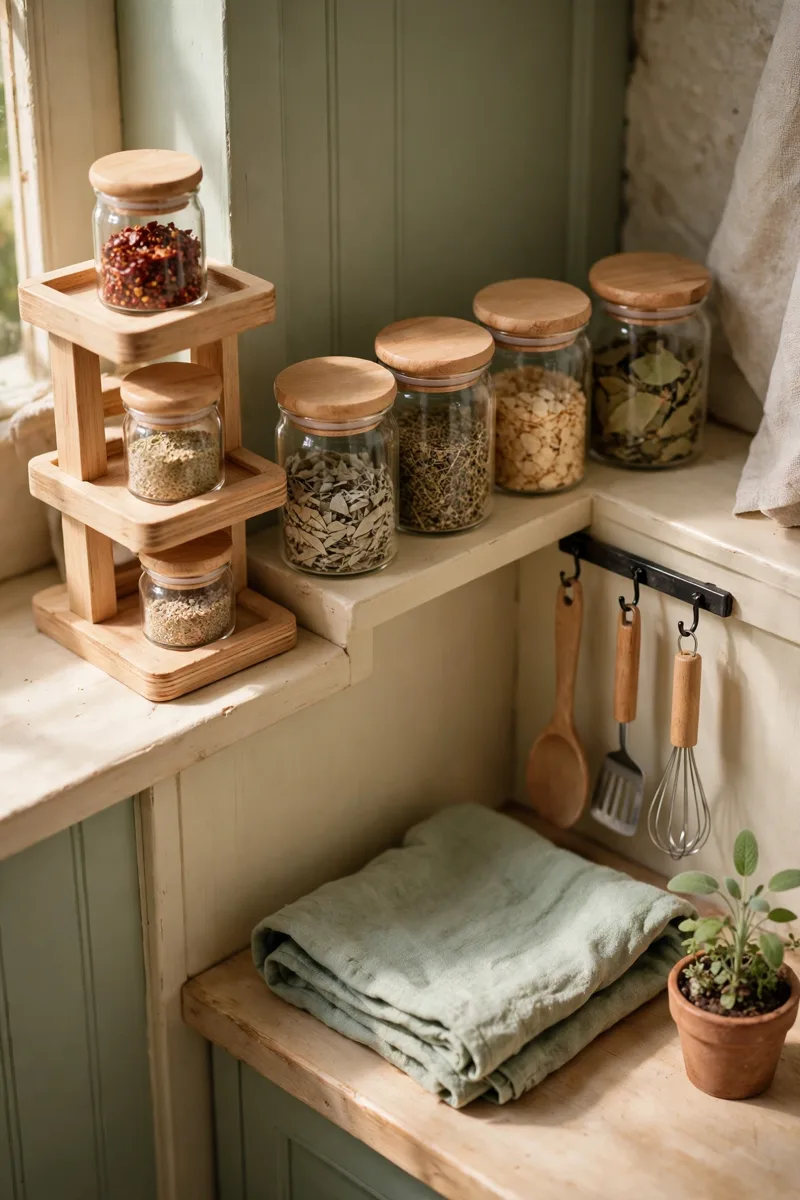
Floor-to-ceiling tension poles with two or three shelves, standing behind the toilet: towels, a plant, the pretty bottles. It uses the tallest dead space in the room, needs no wall contact at all, and leaves with you. If you take one idea from this post, take this one — our full small bathroom storage guide builds the whole room around it.
6. Steam-rated adhesive hooks — placed smart
Two rules make adhesive hooks survive a bathroom: stick them to glazed tile or glass (never painted drywall in the steam zone), and wait the full cure time — usually 24 hours — before hanging anything. Robes and towels only; a hook rated 3 kg holding a 1 kg towel lasts for years, the same hook holding a full toiletry caddy fails by Friday.
7. Suction shelves on glass and smooth tile
In-shower corner shelves on proper locking suction cups hold shampoo bottles fine on smooth surfaces. Test each cup with a tug after 24 hours; re-seat monthly. On textured tile, skip suction entirely and use a tension shower caddy pole instead.
8. Over-the-door towel ladder
A slim over-door rack turns the bathroom door into towel storage for two — critical in rentals where the one installed rail holds exactly one towel, at the far end from the shower. Choose padded hooks so the door paint stays perfect.
9. Peel-and-stick floor tile for the brave
Rental bathroom floors are often the ugliest surface in the home. Peel-and-stick floor tiles (groutable, waterproof, removable lines exist) are the biggest single transformation on this list — a weekend job, and the one to test most carefully: confirm the product line is sold as removable, and photograph the original floor before you start, for your own records.
Move-out removal, method by method
Since every hack here is a promise to your future self, here's the honest removal ledger. Tension rods and poles: seconds, zero trace — the gold standard. Over-door and over-cabinet hooks: lift off, zero trace; check door paint once at install, not at exit. Suction cups: peel off, wipe the tile, done — the only "damage" possible is a clean circle where dust wasn't. Steam-rated adhesive on tile: pull the removal tab slowly, straight and parallel; on glazed tile it releases cleanly. On the rare painted surface where adhesive was used, warm the strip with a hairdryer first and go slowly — and this is exactly why this post routes painted wet-room walls to tension instead. Peel-and-stick products: heat gently, peel at a low angle, and any residue lifts with a cloth and warm soapy water on tile and vinyl. Photograph each wall before you start and after you finish; in a deposit dispute, your own dated photos are the strongest sentence you can say.
Two rooms, one shopping list
Doing both rooms in one pass? The shared kit is shorter than you'd expect: one pack of steam-rated adhesive hooks (bathroom towels, kitchen apron by the door), two tension rods (kitchen rail, under-sink spray hanger works in the bathroom cabinet too), one over-door rack (whichever door needs it more), and one roll of peel-and-stick for a single accent in whichever room is sadder. Around $45–60 total, an afternoon of work, and both "impossible" rooms change at once. Splitting one kit across two rooms is also the budget discipline this site runs on: buy the method, not the room-by-room product sets the ads will suggest.
FAQ
Will adhesive hooks damage bathroom walls when removed? On glazed tile, correctly removed (pull the tab slowly, parallel to the wall), they leave nothing. On painted drywall in a steamy bathroom, adhesive can soften paint — use tension or over-door methods there instead.
Why do suction cups keep falling in my shower? Usually texture: matte, stone-look or handmade tile won't hold a seal. Or grease film — clean the spot with rubbing alcohol, dry fully, apply with firm pressure, and wait 24 hours before loading.
What no-drill decor is safest for the deposit? Anything that touches nothing: tension poles, over-door racks, leaning pieces. Then steam-rated adhesive on tile. Painted walls in wet rooms are the only real caution zone.
Can peel-and-stick products handle kitchen heat? Wall products near a stove must be heat-rated and kept clear of open flame — check the product spec, and prefer them behind the sink run rather than directly behind burners if your stove is gas.
Two rooms, one afternoon
Pick the tension pole for the bathroom and the tension rail for the kitchen, and both "impossible" rooms change in one afternoon with zero holes between them. For a bigger bathroom transformation, continue to the small bathroom storage guide; for walls everywhere else, our peel-and-stick wallpaper guide covers the accent-wall method step by step.
Get the Free Renter-Friendly Makeover Checklist
Room-by-room no-drill steps, a budget tracker and a move-out undo log — free PDF, no email needed.
Download the Free Checklist